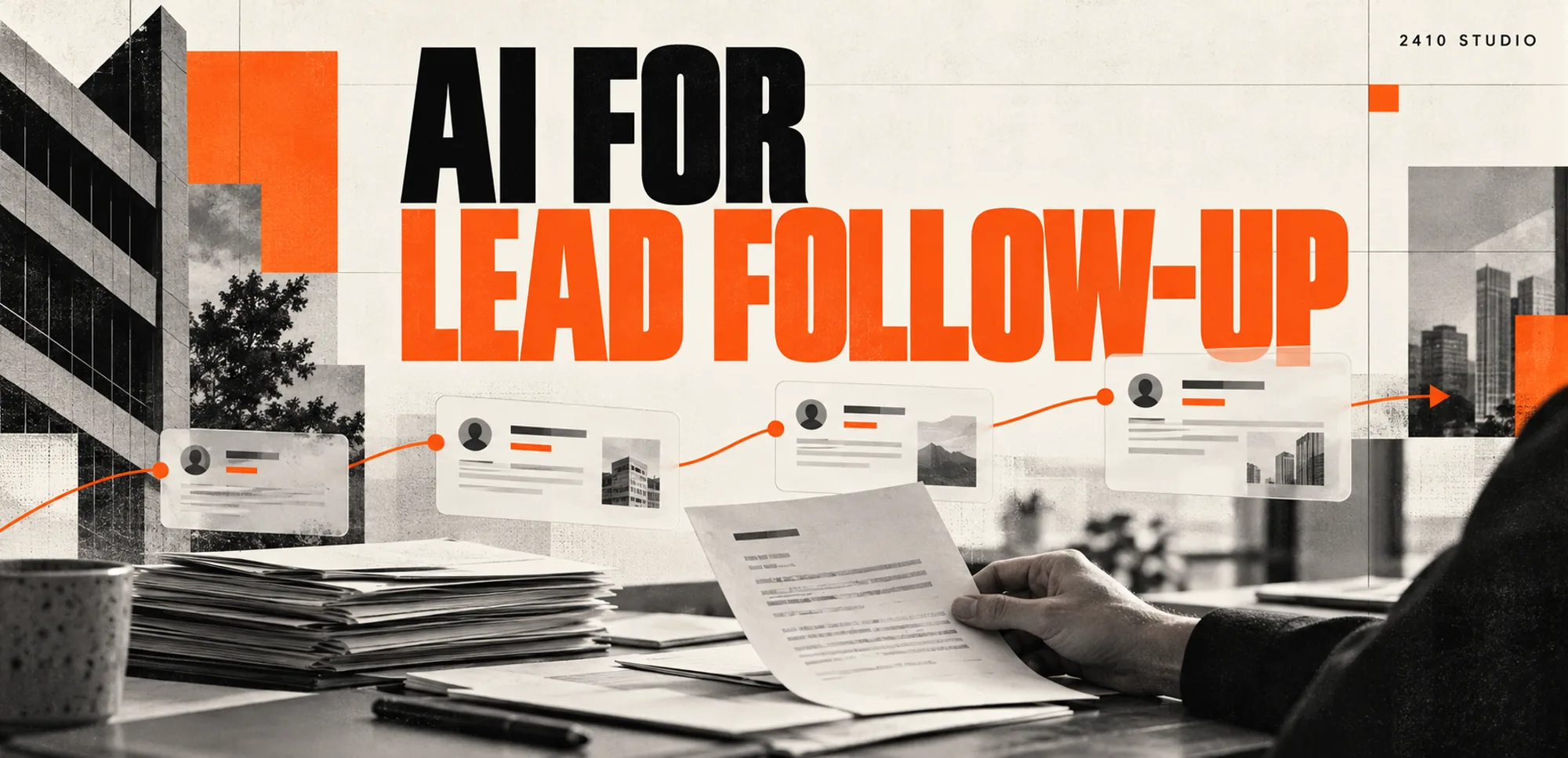
AI can help a small business follow up leads by reading incoming enquiries, preparing relevant replies and keeping the next action visible in the tools the team already uses. Start with people who have contacted you, keep staff responsible for promises and pricing, and measure response quality alongside response time.
Where can AI help a small business follow up leads?
AI is useful where someone needs to interpret an enquiry before deciding what to do next. It can turn a long message into a short summary, identify missing information and prepare a reply for review.
The underlying problem is often scattered information. A prospect fills in a website form, sends a separate email and then calls. Different colleagues see different parts of the conversation. Nobody is certain who should respond.
Before adding AI, choose one place to record the enquiry and assign an owner. A shared inbox or customer relationship management system may already be enough. AI should help the team work from that record rather than create another disconnected inbox.
Useful assistance includes identifying the service requested, pulling out a preferred appointment date and summarising the questions a prospect has asked. Treat those details as suggestions until checked against the original message. An uncertain date should remain uncertain, rather than becoming a confirmed booking.
What would a practical workflow look like?
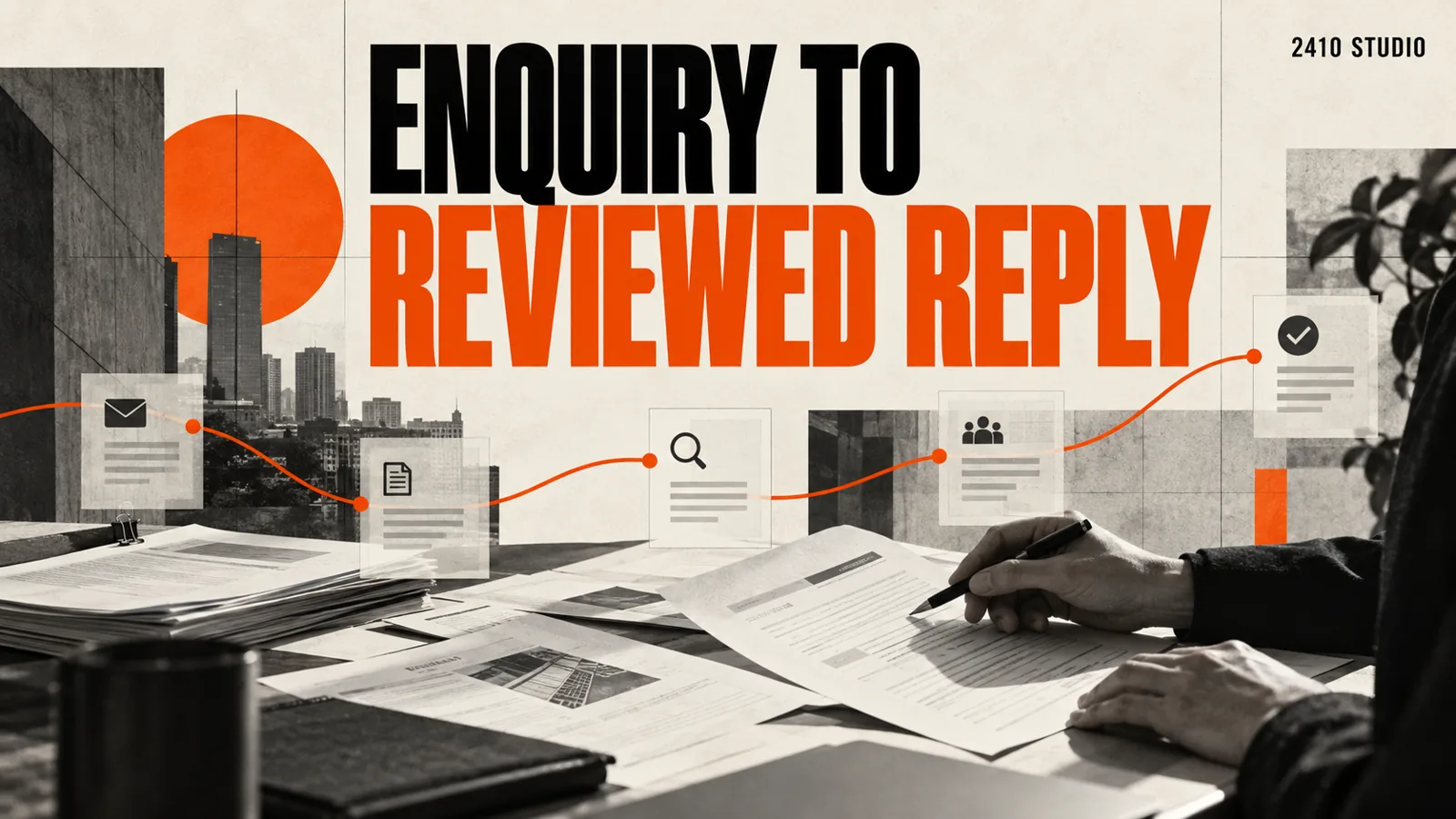
A sensible first workflow collects an enquiry, prepares a draft and asks a named colleague to review it. The system records the outcome so another person can pick up the conversation without starting again.
Consider this illustrative example, rather than a client case study: a property maintenance business receives requests through its website and email. Its office team needs the property address, type of work and access arrangements before arranging a visit.
- Save each incoming enquiry against a contact record and check for an existing conversation.
- Ask AI to summarise the request and flag missing details using a fixed checklist.
- Prepare a reply using approved service information and the customer's actual questions.
- Give the draft and original enquiry to the responsible colleague for review.
- Record the approved reply, next action and follow-up date in the same place.
- Stop pending reminders when the customer replies, books or asks for no further contact.
The draft might ask for access information. It must not invent a price, promise an available engineer or infer that a customer has agreed to work. Those decisions need reliable business records and the right person's approval.
A failed connection should leave the enquiry visible in a queue. Someone must be able to see that preparation failed and reply manually. Quietly losing a lead is worse than taking a little longer to answer it.
Which steps need AI, and which need simple automation?
Use ordinary automation for clear rules and AI for interpreting varied language. Sending a reminder because a task is overdue does not need a language model.
| Step | Sensible starting point | | --- | --- | | Assign an enquiry from a particular form | A fixed routing rule | | Remind an owner about an overdue reply | A scheduled task | | Summarise a long, mixed enquiry | AI assistance with review | | Draft an answer to several questions | AI using approved information | | Approve a price or delivery promise | An authorised person |
For a real product example, HubSpot documents task creation through workflows, including creating a sales task after an enquiry form submission. Availability depends on the subscription and workflow features you have. This is an example of rule-based follow-up, not evidence that every business needs AI.
If most enquiries ask the same straightforward question, improve the form or use an approved reply template first. The 2410 Studio guide to AI agents and automation explains how to choose the level of assistance that fits the work.
How do you keep people in control?
Keep someone accountable for each lead and make the source information easy to inspect. A reviewer should see what the customer said, what the system suggests and which details remain unconfirmed.
Limit the information available to the task. A reply assistant may need the relevant conversation and service descriptions; it does not automatically need every customer record. Decide who can view drafts, correct records and change the approved business information.
Incoming messages are customer content, not instructions for operating your systems. A message asking the assistant to reveal other customers' details must not gain that access. Start with permission to prepare drafts, rather than permission to send messages or change important records independently.
Set explicit boundaries for complaints, unusual requests and disputed commitments. Route these to a person. Keep a record of the draft, reviewer changes and final response so mistakes can be investigated.
2410 Studio is a UK studio that builds AI into the tools a business already uses, with the client keeping the custom code. That starts with understanding ownership and review, alongside the connections between systems. Our project page gives more context for the studio's work.
Frequently asked questions
What should we measure first?
Record how long enquiries wait for a useful response, how many lack an owner and how often staff rewrite drafts. Also inspect a sample for accuracy and relevance; faster replies are only helpful when they answer the question.
Can AI send every follow-up automatically?
Begin with reviewed drafts and a narrow scope. Consider more independent sending only after testing clear boundaries, reliable stopping rules and a practical way for staff to intervene.
Will this increase sales?
It may help the team respond more consistently, but it cannot guarantee sales. Track qualified conversations and bookings alongside response quality, and account for changes in lead sources or demand before attributing results to AI.
Where should a small business start?
Choose one enquiry source and one common service, then test against a small set of real messages your team is authorised to use. If the main issue is missing ownership or overdue tasks, fix that process before commissioning AI.
Bring a typical enquiry and your current follow-up steps to talk to 2410 Studio. We can help identify which steps need simple rules, where AI could support the team and what a useful first test should measure.
START YOUR INTEGRATION