AI can help a small manufacturer spot unusual equipment behaviour and give maintenance staff more time to investigate. It works best when readings can be compared under similar operating conditions and someone owns the response. Start with one machine, keep existing safety checks in place, and compare the results with a simple alert.
What can AI tell you about a machine?
AI can flag a change in how equipment behaves. It cannot tell you with certainty that a part will fail, what caused an unusual reading or whether it is safe to keep running.
The US Department of Energy's operations and maintenance guide describes predictive maintenance based on changes in equipment condition, including vibration and temperature trends. Condition monitoring does not have to involve AI. The question is whether a tool that compares several readings together can give your team a more useful signal than the checks it already uses.
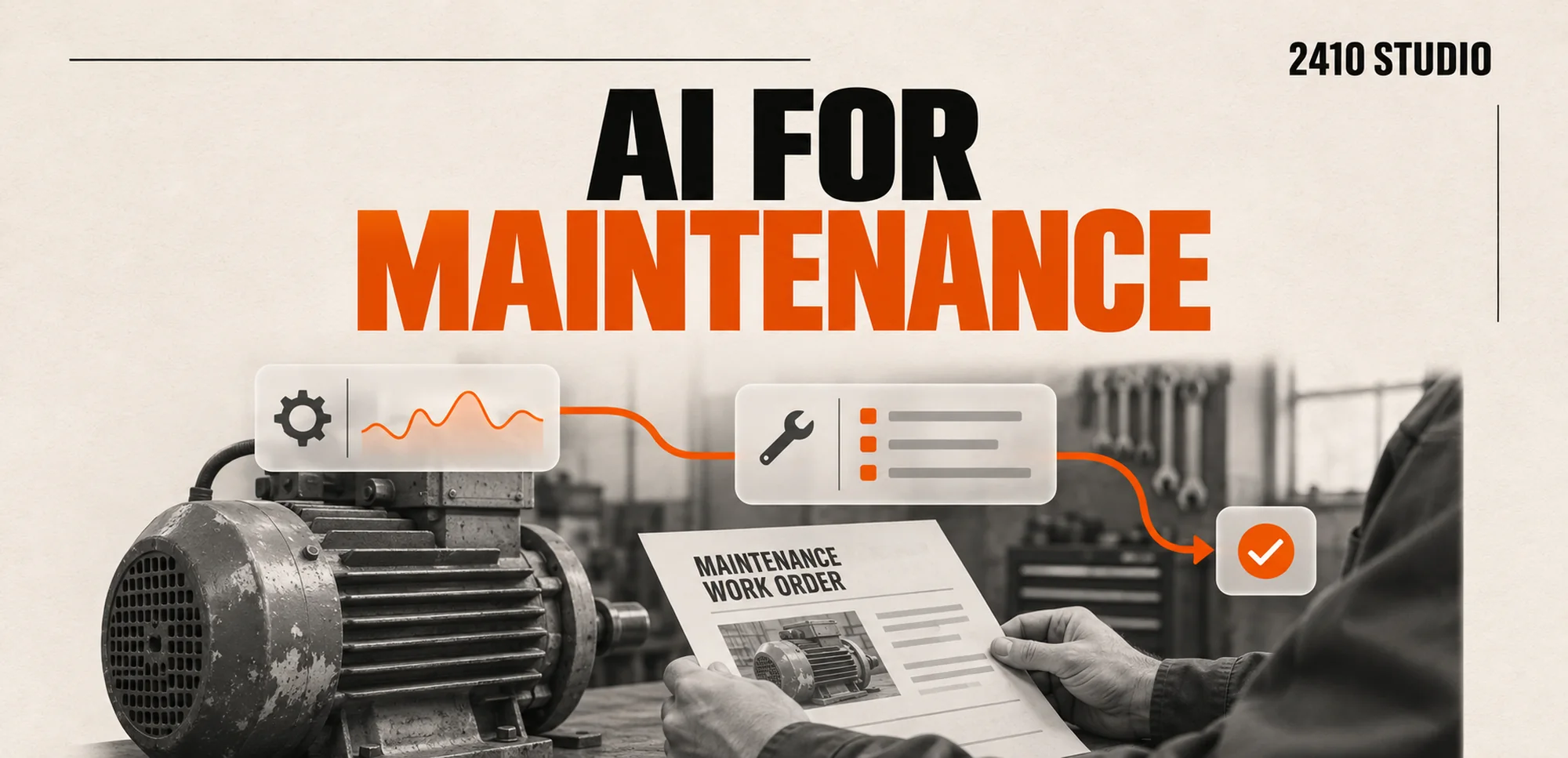
Take a workshop motor. Its readings may change when the machine starts, when it runs under a different load or when the air around it gets warmer. A higher reading on its own might tell you very little. A sustained change during comparable runs may be worth a closer look. That alert should show what changed and when, so a technician can judge whether it matters.
What would a first maintenance workflow look like?
Choose one machine with a clear maintenance owner and a history worth investigating. Use the pilot to help staff create and investigate work orders. Keep it separate from machine controls and existing protective equipment.
Here's an illustrative workflow for a small packaging business. It is not a client case study. A conveyor motor has caused interruptions, and the maintenance lead wants to know whether a change in its behaviour could be picked up sooner.
- Identify the asset, the problem you want to notice and the readings the team can reliably collect. Ask maintenance staff which operating states are normal.
- Compare readings from similar runs. Mark periods when the equipment was off, recently serviced or running a different job so these aren't mistaken for faults.
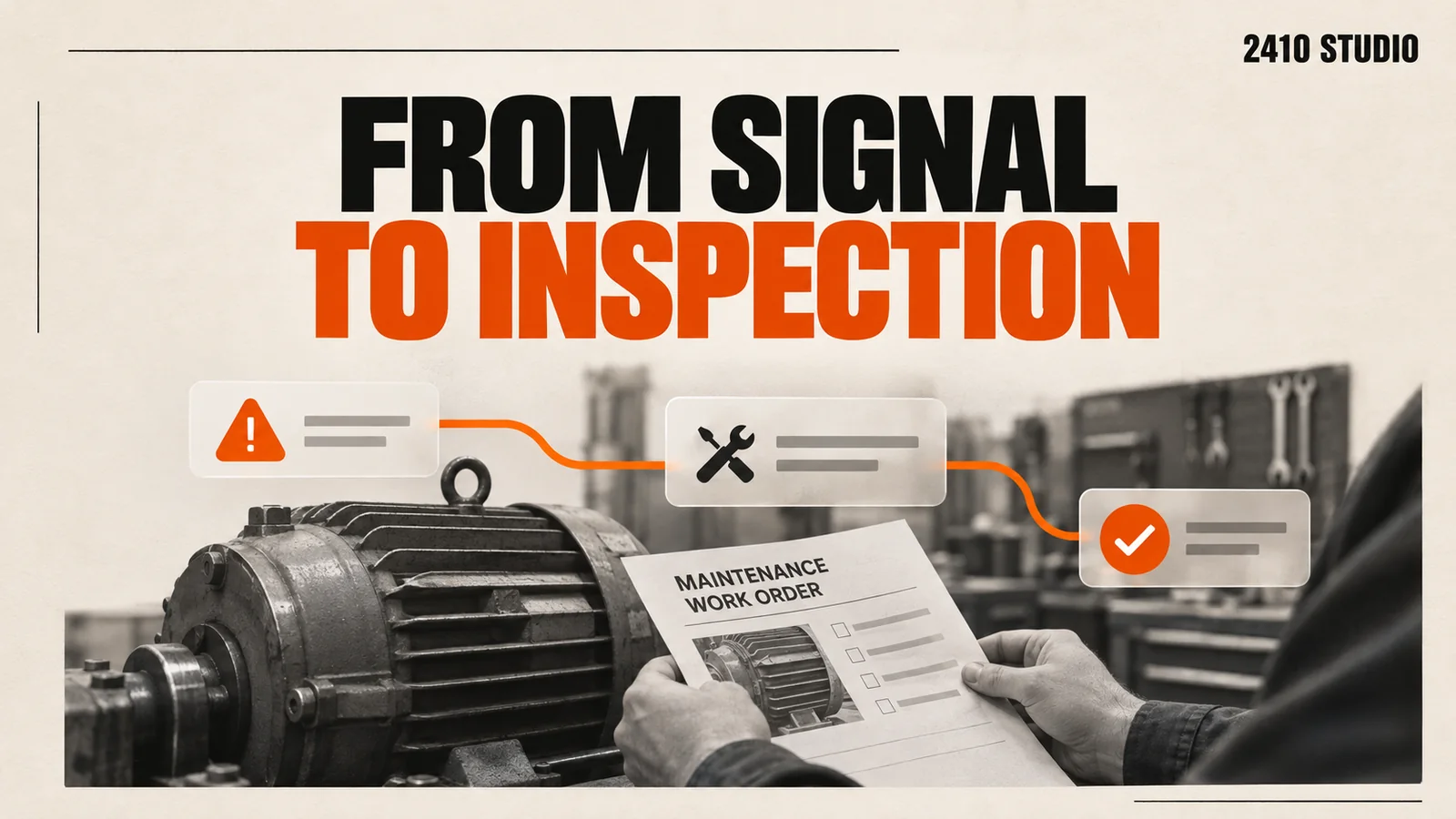
- Send a persistent change to the existing maintenance queue. Include the asset, time, comparison period and available readings.
- Have a technician assess the alert using the site's normal inspection and safety procedures. Let staff decide what to do and record what they found.
- Review those findings alongside the alerts. When the signal was misleading, record whether the cause was a normal process change, missing data or a problem with the reading itself.
A gap in data deserves its own message. If a sensor drops out, the screen should say that readings are unavailable. Silence is easy to mistake for a clean bill of health.
When is a simple alert the better choice?
Use a simple alert if a known limit or a regular inspection already catches the problem in time. AI is worth comparing when what counts as normal changes with the job and a fixed rule repeatedly raises alerts the team cannot act on.
| Situation | Sensible starting point | | --- | --- | | The task is due at a known interval | A scheduled maintenance reminder | | Staff already have an agreed operating limit | A fixed alert alongside existing controls | | Several readings shift together during comparable runs | Test whether AI spots useful changes | | An alert calls for inspection or a repair decision | A qualified person using site procedures |
Do not make the pilot responsible for deciding whether the equipment is safe. If nobody can respond to the alerts, fix ownership first. An unread queue will not give staff more time, even if the warning arrived early.
How do you tell if the pilot is worth keeping?
Measure whether the alerts give staff useful notice and whether the effort to investigate them is justified. Start with the way the team works today so you have something to compare against.
Track the number of alerts that lead to a meaningful inspection, the time staff spend checking them and how much notice they receive before a confirmed issue. Log problems that happen without a warning, too. Looking only at the alerts you received leaves out the faults the pilot missed.
Keep the original rule running as a comparison where practical. If both methods highlight the same issues with similar notice, the simpler one may be enough. If the AI spots more useful changes but creates a backlog of unnecessary checks, narrow the scope or change the review process before expanding.
Be careful about claiming downtime prevented. An alert followed by a repair tells you what the team found. It does not establish what would have happened without the alert. Report confirmed findings and the actual changes you can observe.
Frequently asked questions
Do you need new sensors?
Start by checking what the machine and existing tools already record. If coverage is too poor to make a useful comparison, ask your maintenance team what gap matters before buying anything.
Can you start with very little fault history?
You can test whether the system notices departures from normal operation. Without confirmed examples of faults, avoid claiming that it predicts a particular failure or gives a known amount of advance warning.
Can this replace scheduled maintenance?
Keep required inspections, service intervals and protective systems in place. Use the pilot to decide whether changes in condition give the team an additional reason to investigate.
2410 Studio is a UK studio that builds AI into the tools a business already uses, with the client keeping the custom code. You can see the studio's AI projects. If you have one machine in mind, talk to 2410 Studio and bring its service history, the readings you already collect and an example work order. We can help identify what a small pilot would need to prove.
START YOUR INTEGRATION