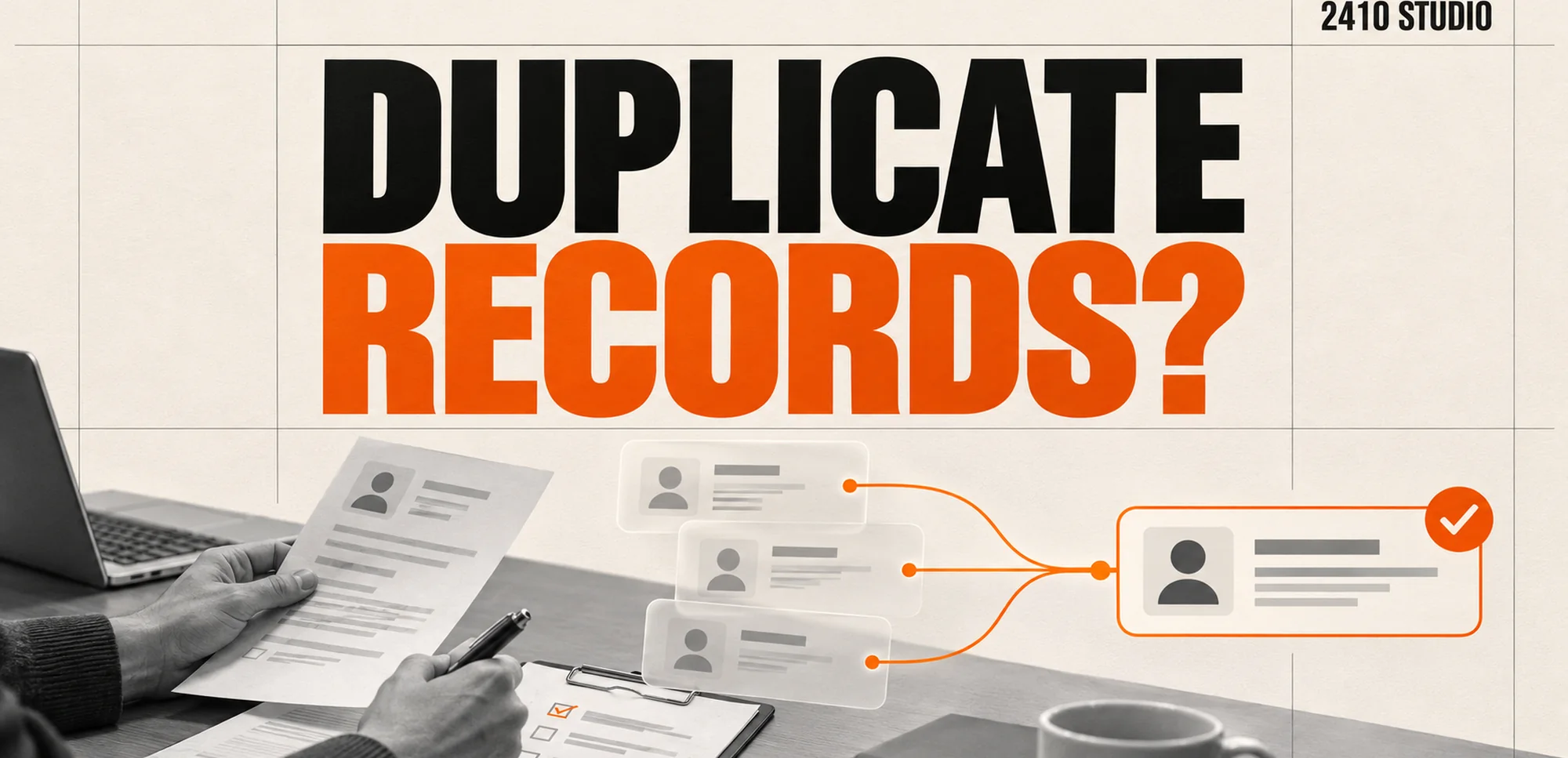
AI can help clean up duplicate customer records by suggesting likely matches when names, addresses or contact details differ. Start with clear matching rules and a trusted customer identifier where available. Keep uncertain matches for staff review, preserve the original information and check linked activity before combining anything.
Why do duplicate customer records cause problems?
Duplicate records split the history your team needs to do its work. A colleague can miss an earlier conversation, chase a completed task or send another reply because the information sits against a different entry.
The same customer might appear in an enquiry form, a booking system and an accounts package. Some differences are harmless formatting. Others matter: a shared office number could belong to several people, while a parent and child may share an email address.
Before matching records, decide what each record represents. A person, a company and a branch are different things. A relationship between them does not mean they should become one entry.
The aim is a usable history, not simply fewer rows in a spreadsheet. If your team cannot find the right contact or understand what changed, a smaller database has not solved the problem.
When can matching rules do the job without AI?
Use fixed rules for reliable identifiers and predictable differences. Removing extra spaces or standardising a phone number format does not require AI. Nor does linking records that carry the same verified customer identifier.
Treat an exact match as evidence whose strength depends on the field. Two records sharing an internal identifier may be much stronger evidence than two records sharing a surname. Even an email address needs context if households or teams use a shared inbox.
| Situation | Useful starting point | | --- | --- | | Same verified customer identifier | A clear linking rule | | Extra spaces or different capitalisation | Standard formatting rules | | Shared name but different contact details | Keep separate unless more evidence supports a match | | Different spelling with several supporting details | A suggested match for review | | Conflicting records with active work attached | An authorised person checks the history |
Microsoft's duplicate handling documentation for Customer Insights gives a real example of configurable matching and merge preferences. It describes rules using more than one condition and choices about which values take precedence. The business still needs to decide which rules make sense for its customers.
Do not buy AI to compensate for a missing field that a better form could collect. Fixing data entry may prevent more duplicates than an ongoing clean-up process can resolve.
Where can AI help with the difficult matches?
AI may help compare varied text and rank candidates that simple rules leave unresolved. Use it to suggest where staff should look, rather than treating its conclusion as proof that two customers are the same person.
Here is an illustrative workflow for a service business, not a client case study. Its enquiry and booking systems hold slightly different versions of customer names and addresses. Staff currently search both systems before deciding whether to create another record.
- Keep the original records and identify which system owns each field.
- Standardise predictable formatting differences using fixed rules.
- Find possible matches from the relevant records, rather than comparing every field indiscriminately.
- Ask AI to highlight supporting details and contradictions in the remaining candidates.
- Show a named reviewer both source records and their linked conversations or bookings.
- Record the reviewer decision and create a traceable link or controlled update.
A useful suggestion says which details agree, which disagree and which are missing. It should not fill in a new phone number or invent an explanation for an address change.
Give the assistant access only to the information needed for that comparison. A process for resolving duplicate contacts does not automatically need payment details or every document attached to a customer.
How do you combine records without losing useful history?
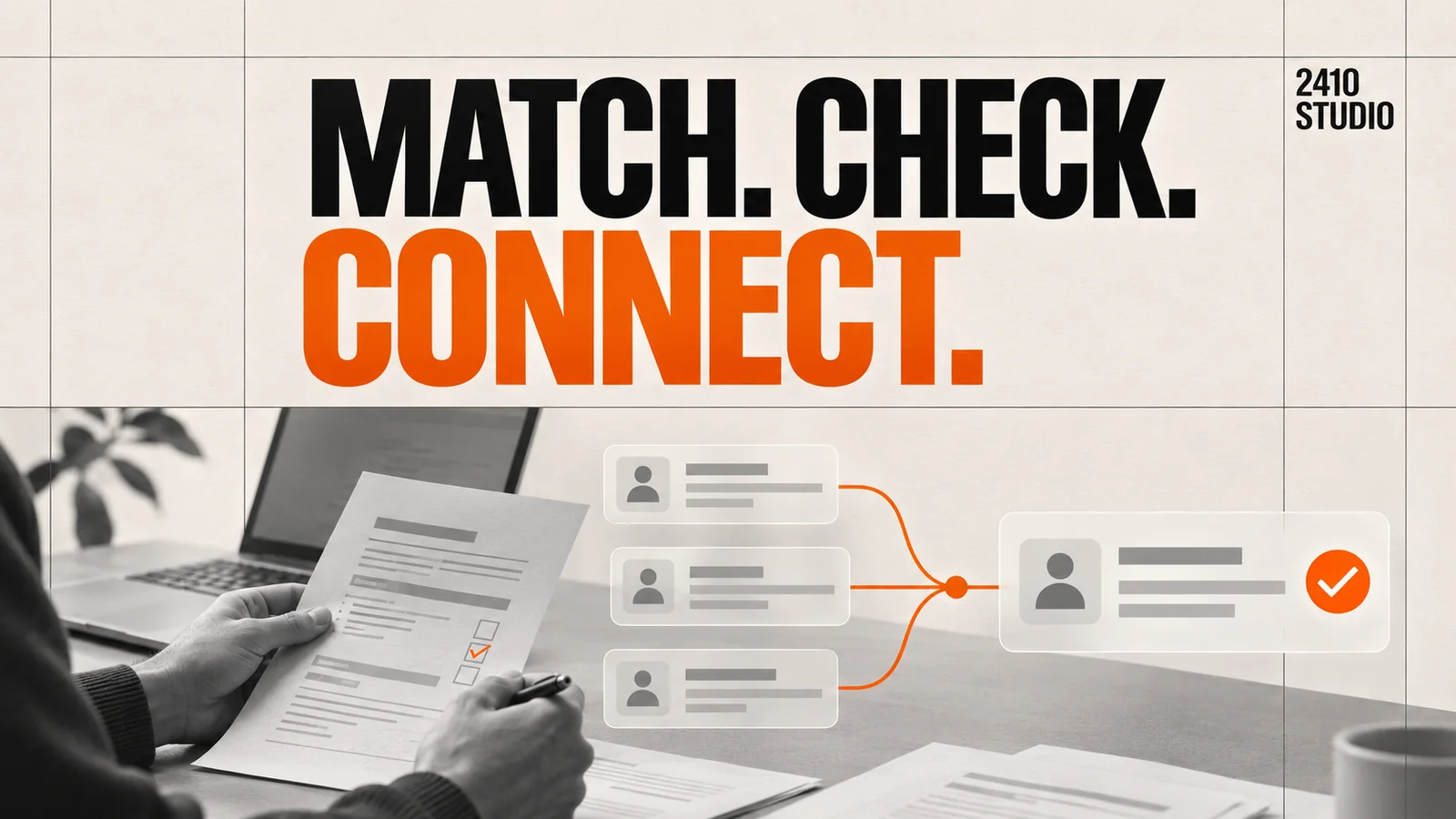
Agree which source takes precedence for each field and preserve enough history to understand or reverse a wrong decision. Linking records may be a better first step than physically merging them.
A recently edited address is not necessarily a verified address. An accounts package may be authoritative for billing details while the booking tool owns appointment preferences. Decide those responsibilities explicitly instead of choosing whichever record looks fullest.
Check what happens to open tasks, notes and permissions before making a change. Two contact records can have different relationships to a company or job. Combining them incorrectly can make information visible in the wrong place or direct a message to the wrong person.
Start by testing proposed matches without changing live records. Have staff mark whether the suggestions are correct and inspect disagreements. Include shared contact details, similar names and old addresses in the test set.
Measure incorrect matches separately from missed duplicates. A missed duplicate creates extra work; an incorrect combination can affect another customer's history. Also track staff review time and whether fewer new duplicates appear after improving entry forms.
If the review queue grows faster than staff can assess it, narrow the matching rules or work through one source at a time. Do not lower the standard of evidence merely to clear the queue.
Frequently asked questions
Should we merge every suggested match?
No. A suggestion is a request to check the evidence. Keep records separate when important details conflict or staff cannot establish that they represent the same customer.
Can we start without a customer identifier?
Yes, but the process will rely more heavily on combinations of fields and human review. Introduce a consistent identifier for future records where your systems support it.
Does cleaning duplicates mean deleting records?
It does not have to. You can preserve source records, record the relationship between them and control which information the team sees as current.
How do we know whether it is worth doing?
Track the time spent finding customer history, the number of duplicate entries created and the accuracy of suggested matches. Include the effort needed to review and correct the process.
2410 Studio is a UK studio building AI into the tools a business already uses, with the client keeping the custom code. Explore our AI projects, or bring two examples of a suspected duplicate and the systems involved to talk to 2410 Studio. We can help work out whether better rules, cleaner forms or AI-assisted review would make the biggest difference.
START YOUR INTEGRATION