
People often ask what working with 2410 Studio actually looks like week to week. The honest answer is three stages, in this order, every time.
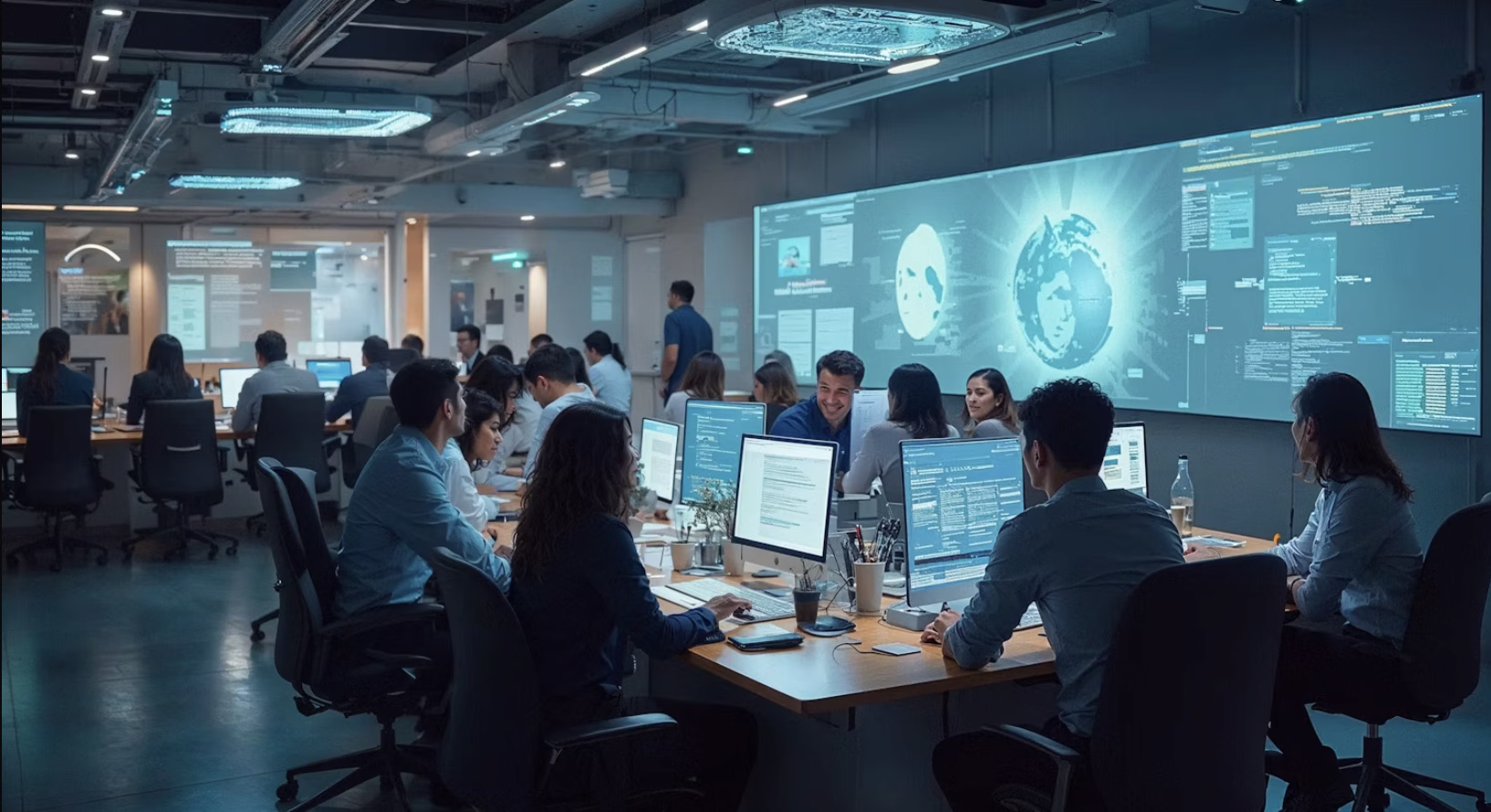
Stage one: research
We start by understanding the problem properly, not the version of the problem that gets mentioned in a first call, but the real shape of it once we look at how the work actually happens day to day.
This stage involves talking to the people who do the work, not just the person who hired us. The person doing the task daily knows things about it that nobody else in the business has noticed, because they have stopped seeing it as a problem and started seeing it as just the job.
Research ends with a clear, specific definition of what we are building and what success looks like. Not a vague goal. A specific outcome we can measure.
Stage two: build
This is where the system gets built, tested against real examples from the business, and refined. We do not build in isolation and reveal a finished product at the end. We build in short cycles, show progress early, and adjust based on what we see when it meets real data.
This stage is also where the parts most demos skip get added. Monitoring so we know if it starts behaving unexpectedly. An escalation path for anything it cannot handle confidently. A way to explain its decisions after the fact.
Stage three: deploy
The system goes live in the actual business, not a test environment. This is also where most of the real learning happens, because no amount of testing fully replicates what happens when real customers and real staff start using something every day.
We stay through this stage. Deployment is not handing over a file and disappearing. It is watching how the system performs in its first weeks of real use and adjusting quickly when something needs it.
Why this order matters
Skip research and you build something technically impressive that solves the wrong problem. Skip the deploy stage support and you end up with exactly the kind of demo that quietly disappears six months later.
Research, build, deploy, in that order, every time. That is how a system ends up actually running in a business instead of sitting in a folder labelled "pilot project."
If you have a problem you want to take through this process, talk to us at 2410studio.com.
START YOUR INTEGRATION