Sep 20, 2025
Why On-Device AI Is the Future for Enterprise
On-device AI gives enterprises speed, privacy, and lower costs at scale. Discover why 97% of CIOs have it on their 2026 roadmap and what it means for you.
Most enterprise AI conversations start with the same question: which cloud provider should we use? That is the wrong question. In 2026, the businesses pulling ahead are not debating cloud platforms; they are deciding whether they need the cloud at all.
On-device AI for enterprise is no longer a niche hardware concept. It is a strategic decision that affects your data security, operating costs, regulatory compliance, and competitive positioning. According to recent market research, 97% of US CIOs now have edge AI on their technology roadmap for 2025 to 2026. If your business is not yet thinking about this shift, your competitors likely are.
What On-Device AI Actually Means for Your Business
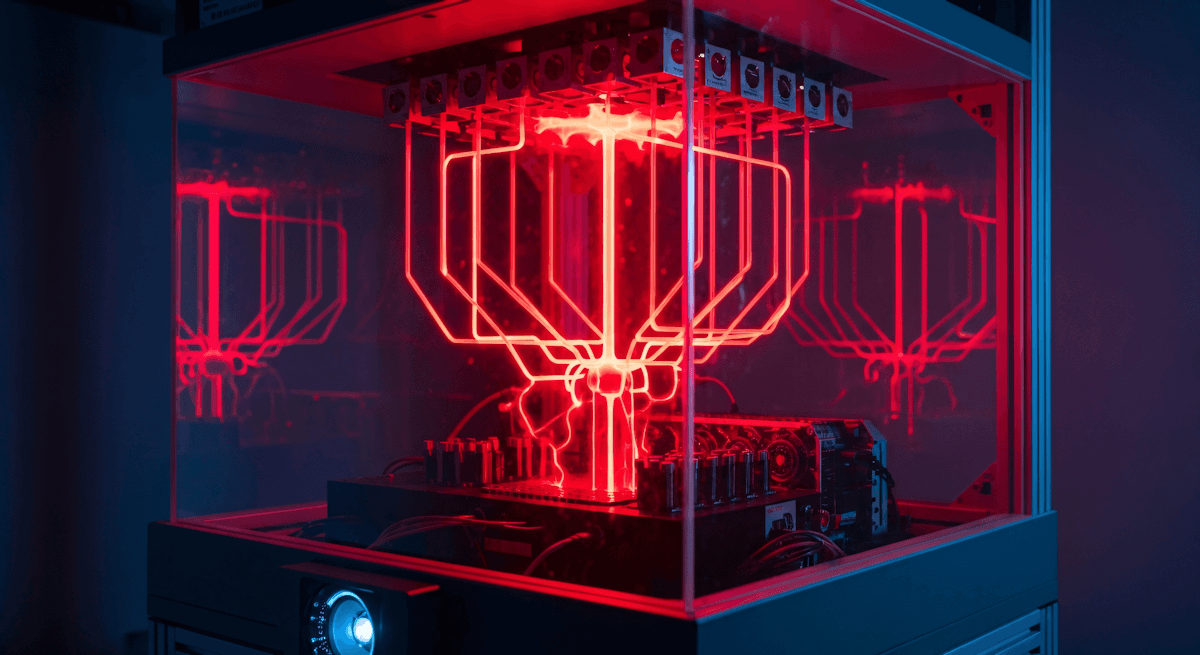
On-device AI means running artificial intelligence models directly on local hardware, whether that is a dedicated chip, an edge server, or a purpose-built device, rather than sending data to a remote cloud server for processing.
When you use cloud-based AI, your data travels off your premises, gets processed by a third-party server, and returns as a result. That journey creates three problems no business can afford to ignore: latency, privacy risk, and dependency on external infrastructure. On-device AI eliminates all three by keeping processing local.
This is not a technical nuance. It is a business decision with direct implications for cost, compliance, and operational continuity.
Why Enterprise Leaders Are Moving Beyond Cloud-Only AI
The case for cloud AI made sense in the early years of the current AI wave. Models were too large to run locally, hardware was expensive, and most use cases were exploratory enough that latency was tolerable. That environment has changed fundamentally.
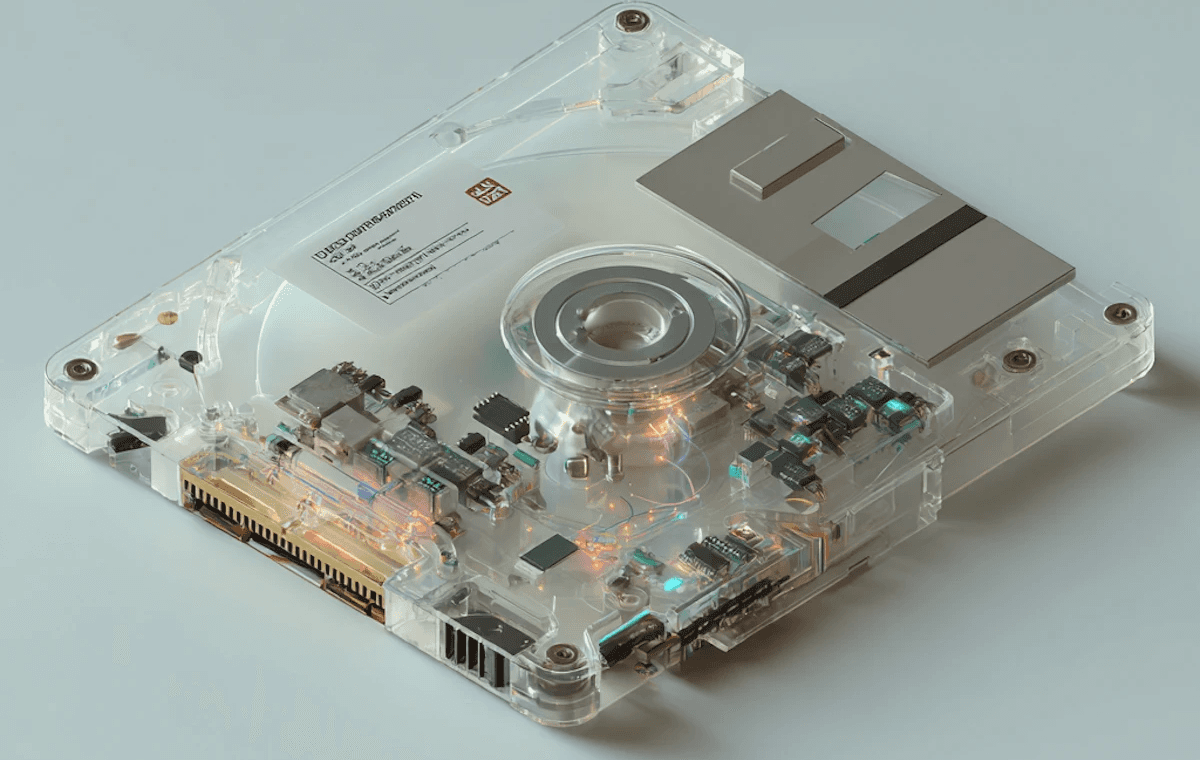
Model compression, specialised AI chips, and purpose-built edge hardware have made it possible to run highly capable AI models on devices that fit in a server rack, a retail unit, or a clinical environment. Meanwhile, cloud AI costs at enterprise scale continue to rise. Research indicates that private on-device AI becomes more cost-effective than cloud alternatives at approximately 500,000 to 1,000,000 AI queries per day. For any business running AI at volume, that crossover point arrives faster than most finance teams expect.
The global edge AI market is projected to grow from USD 47.59 billion in 2026 to USD 385.89 billion by 2034, a compound annual growth rate of 29.9%. That is not speculative growth. It is enterprise budgets shifting in real time.
Cost, Control, and Competitive Advantage
90% of organisations are currently increasing their edge AI budgets, with 30% boosting investment by 25% or more. The reason is straightforward: 91% of enterprise technology leaders agree that local data processing delivers a direct competitive advantage. This is not an abstract technology trend. It is a business realignment, and it is happening now.
The Three Business Problems On-Device AI Solves
Speed
Cloud AI introduces latency. Every query travels to a remote server and waits for a response. For use cases requiring real-time decision-making, such as quality inspection on a production line, fraud detection at a payment terminal, or patient monitoring in a clinical setting, seconds matter. Milliseconds matter more. On-device AI responds at hardware speed, not network speed. Manufacturing companies adopting edge AI have already reported a 40% reduction in operational downtime as a result.
Privacy and Regulatory Compliance
Data protection regulations are tightening globally. GDPR fines reach up to 20 million euros. HIPAA governs patient data in healthcare. Financial services regulators across the UK, EU, and US impose strict requirements on where data can travel and how it must be stored. Sending sensitive business data to a third-party cloud provider creates exposure at every point of that journey. On-device AI keeps data on your infrastructure, eliminates third-party data handling entirely, and significantly reduces your compliance burden across GDPR, HIPAA, CCPA, and emerging AI governance frameworks.
Operational Resilience
Cloud services experience outages. If your AI capability depends entirely on a remote server, a connectivity disruption takes that capability offline. On-device AI operates independently of internet availability. For businesses in manufacturing, logistics, healthcare, or any sector where operational continuity is non-negotiable, this is not a preference. It is a structural requirement.
How 2410 Studio Builds On-Device AI Systems
At 2410 Studio, we do not advise on AI architecture and then hand the build to someone else. We design, build, and deploy the entire system. One team owns every project from research to live deployment. Our experience spans 120 projects across 20 countries, reaching more than 500,000 users.
MimiClaw: Purpose-Built Edge AI Hardware
MimiClaw is one of our flagship products in the on-device AI space. It is purpose-built edge AI hardware designed for businesses that need AI capability without cloud dependency. MimiClaw runs AI inference locally, integrates with existing business systems, and is built to enterprise standards for reliability and security.
It is designed for environments where cloud connectivity is unreliable, prohibited by regulation, or unacceptable from a risk perspective. It delivers the performance your operations require without the data exposure your risk and legal teams cannot accept.
SENTINEL: Monitoring AI Wherever It Runs
Deploying AI on the edge does not mean deploying AI without oversight. Our SENTINEL platform gives enterprises full visibility into how their AI systems perform, regardless of where those systems are located.
SENTINEL tracks model behaviour, flags anomalies, and generates tamper-resistant audit logs for every AI decision. For regulated industries, this is what separates a functional AI deployment from a defensible, auditable business system. You can explore our full capability set, including SENTINEL and MimiClaw, at 2410studio.com.
Is On-Device AI Right for Your Business?
Not every AI workload should run on-device, and the right answer depends on your specific requirements. Here is a practical framework for making that decision.
If your data is sensitive and would create legal or reputational risk if handled by a third party, on-device processing is the safer path. If your use case requires sub-second responses and you cannot guarantee low-latency cloud connectivity at all times, on-device is likely necessary. If your operating environment includes poor or intermittent connectivity, your AI system must be capable of functioning offline. If you are processing AI queries at high volume, local inference almost certainly becomes more cost-effective at scale.
You can explore how 2410 Studio has applied these principles across sectors, from financial services to healthcare to government, at 2410studio.com/work.
The Hybrid Architecture Most Enterprise Businesses Will Choose
The most effective enterprise AI deployments in 2026 are not purely cloud or purely on-device. They are hybrid: time-sensitive, privacy-sensitive, or offline workloads run on local hardware, while computationally intensive or lower-risk tasks run in the cloud.
This model gives businesses the best of both approaches: the power and flexibility of cloud AI where it makes sense, and the speed, privacy, and resilience of on-device AI where it matters most. Healthcare organisations implementing edge AI have reached a 90% adoption rate within their sectors. Manufacturing companies report a 40% reduction in downtime. These are not pilot results. They are production outcomes.
2410 Studio designs and builds these hybrid architectures end-to-end. We assess your specific requirements, design the appropriate infrastructure, and deliver a production-ready system that is resilient by design, not by luck.
Your Next Step
On-device AI is not a future technology. It is a present capability that enterprises across manufacturing, finance, healthcare, government, and retail are already using to reduce risk, cut costs, and build operational resilience.
If your business is ready to move from AI ideas to AI results, start a conversation with 2410 Studio at 2410studio.com. We will help you determine the right architecture for your specific needs and build a system that is production-ready from day one.