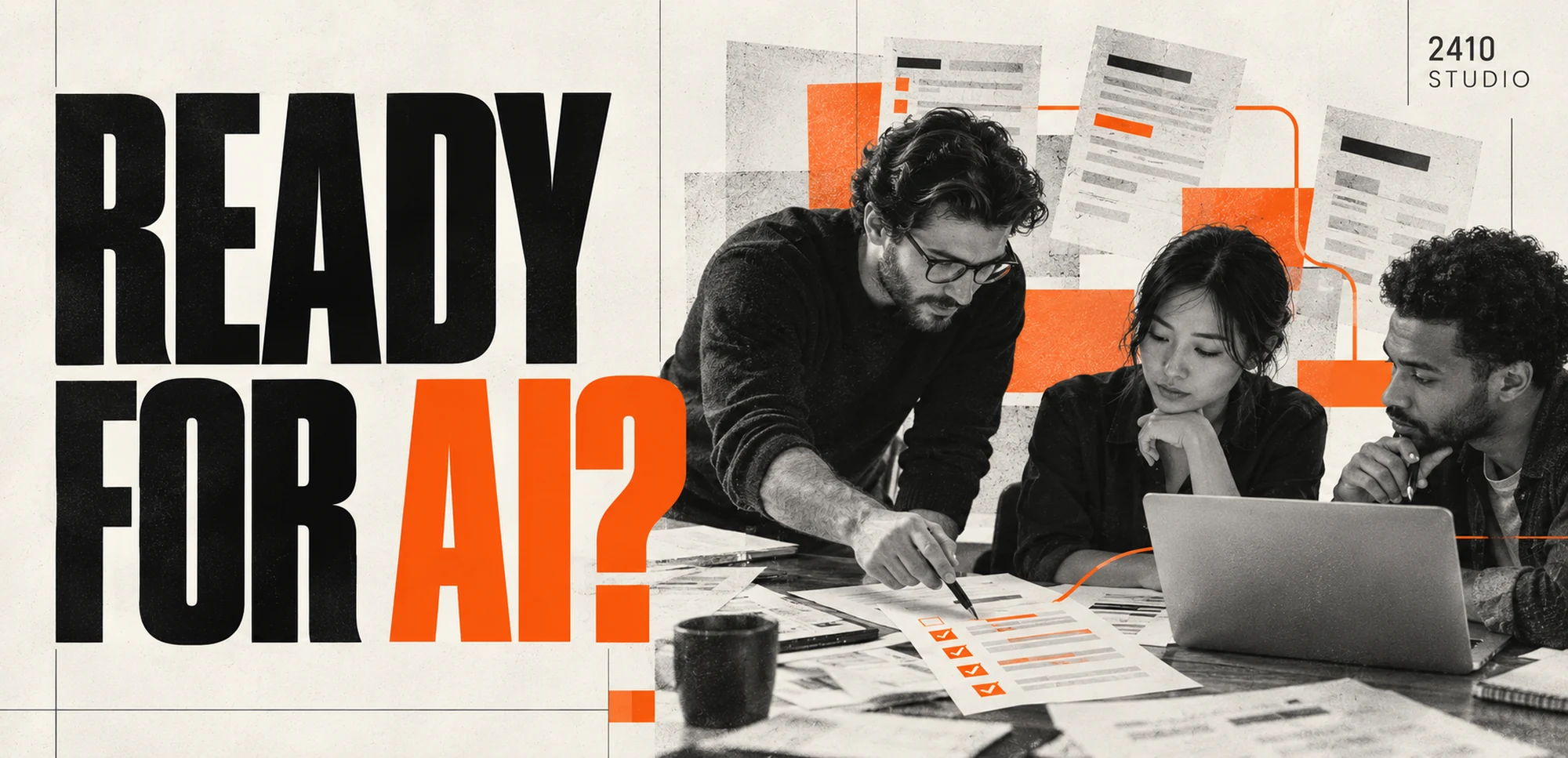
Your business is ready to test AI when one useful workflow has a clear owner, accessible information, a checkable output and a way to measure improvement. You do not need perfect systems across the company. You do need to understand the chosen task well enough to test it without disrupting essential work.
How do you know if your business is ready for AI?
Look for evidence that one specific task can support a controlled trial. Readiness is about the conditions around that task, rather than the size of your business or the number of tools you own.
A useful candidate has a recognisable start and finish. Your team can explain what information arrives, what they do with it and what they check before passing it on. They also know which cases need a different approach.
For example, preparing a summary of a customer enquiry may be easier to test than asking AI to manage an entire sales process. The summary has a source document and a reviewer who can compare the two. The broader process includes decisions, commitments and relationships that need more investigation.
That is an illustrative comparison, not a claim that a particular setup is ready without assessment. Even a small task can be unsuitable if its information is unreliable or nobody has time to review the results.
Which foundations should be in place?
Put ownership, information access and a practical baseline in place before starting the trial. These foundations help you judge whether AI has improved the work, rather than simply changed how it looks.
Use this checklist for the proposed workflow:
- Problem: Staff can describe a specific delay, error or repeated effort.
- Owner: One person can make decisions about the process and follow up problems.
- Information: Required documents and records are available through authorised access.
- Review: Someone can check whether the output is useful and accurate.
- Baseline: You can observe current handling time, corrections or unresolved work.
- Fallback: The task can continue if the trial system is unavailable.
You do not need to pretend each item is already solved. Mark gaps honestly and agree what must happen next. If the information exists only in personal inboxes, for instance, the first step might be a shared intake process with clear access rules.
Staff participation matters as much as access to software. Involve people who understand the awkward cases, and allow time for them to review examples. A sponsor can authorise the project, but cannot substitute for practical knowledge of the task.
What are the signs you should wait?
Wait when the workflow is still being decided, the required information cannot be used appropriately or the business cannot check the result. Fixing those conditions first can prevent avoidable rework.
If two teams disagree about who owns an enquiry, automating the handoff will not resolve the disagreement. If service details change without anyone updating the reference material, a reply assistant has no dependable source. Those are operating issues to address before expanding automation.

Another warning sign is choosing a tool before identifying the problem. A demonstration can help people understand possibilities, but it does not establish that the business needs that particular system. Ask what would improve for customers or staff if the proposed build succeeds.
Consider a simpler change first when the task follows clear rules. A better form, a standard template or an ordinary connection between applications may remove the repeated effort. AI is more relevant where varied text or documents need interpreting, and even there it should have a defined role.
For wider context, the NIST AI Risk Management Framework provides a voluntary framework for managing AI risks. It is a reference for structured thinking, not a certificate that any particular business is ready to deploy a system.
How can you run a useful first trial?
Keep the trial narrow, make review explicit and agree what success would justify continuing. The aim is to learn whether a particular workflow helps, rather than proving that AI belongs everywhere.
Begin with sample information and representative cases. Include missing details, unclear wording and requests outside the proposed scope. For each one, record the expected behaviour, including when the system should stop and ask a person.
Then compare the complete trial task with the existing process. Include time spent checking and correcting the output. Count unresolved exceptions and failed handoffs as well as completed items. An attractive draft is not an improvement if staff need longer to repair it.
Agree a review point and a decision: continue, adjust or stop. Check the ongoing cost, who maintains the source information and whether the team can use the result in its existing tools. Keep the manual process available until the trial has earned wider use.
2410 Studio is a UK studio that builds AI into the tools a business already uses, with the client keeping custom code. Its AI workflow audit guide explains how to examine a candidate process before committing to a build.
Frequently asked questions
Do we need all our data in one system?
Not necessarily. The selected workflow needs appropriate access to the information it uses. Consolidating unrelated information may add work without helping the first trial.
Can a small team be ready for AI?
Yes, if it has a clear task, owner and review process. Team size alone does not establish whether a project is useful or feasible.
What if the trial shows no benefit?
Treat that as evidence to change or stop the proposed approach. Do not expand it simply because setup work has already been completed.
Describe one task your team would like to improve and talk to 2410 Studio about readiness. We can help identify what is ready to test and what needs attention first.
START YOUR INTEGRATION