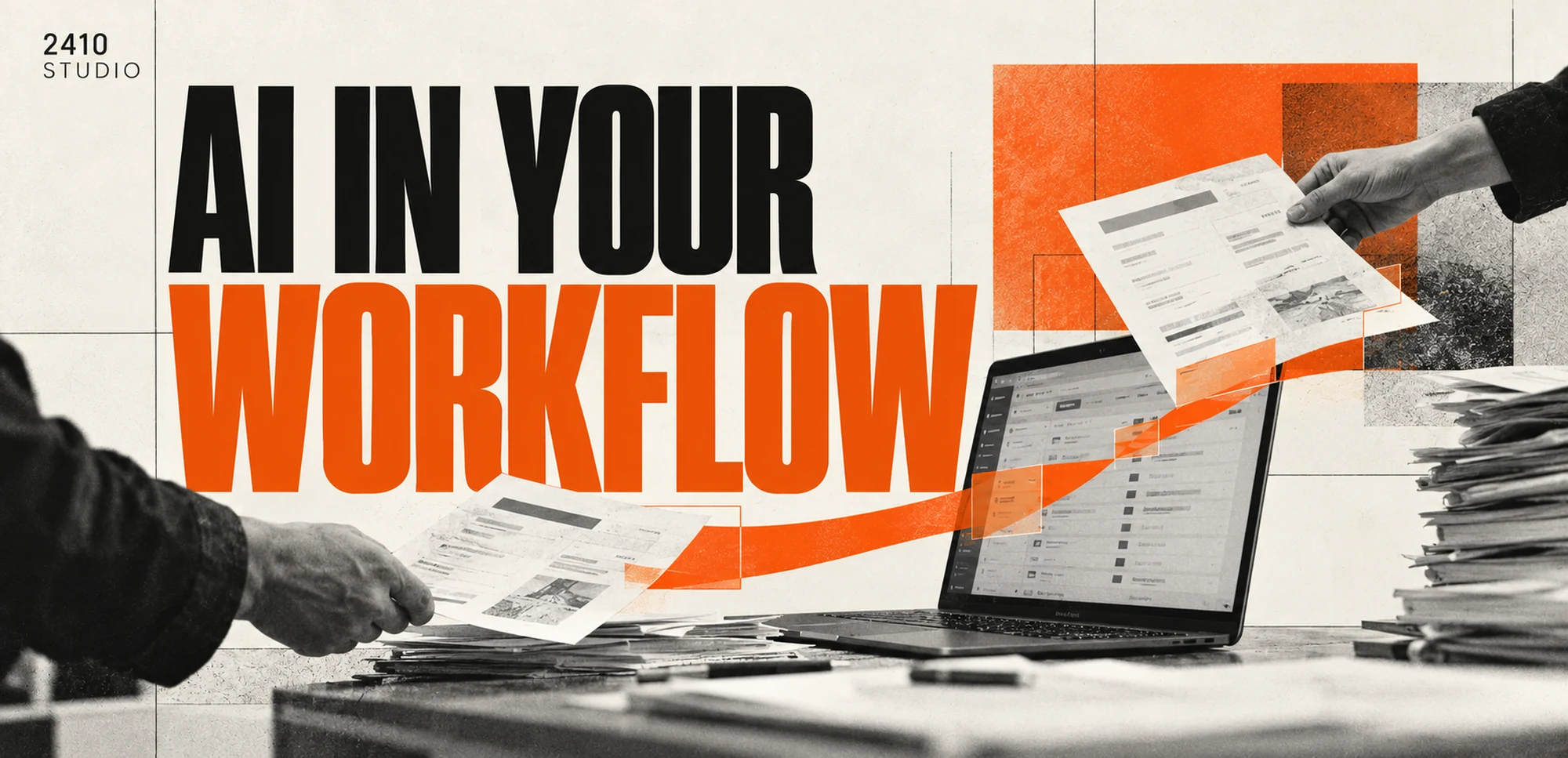
Building AI into a business workflow means connecting it to the information, tools and decisions involved in a real task. AI might summarise a request, prepare a document or suggest a next step, while people keep responsibility for important decisions. Start with one defined process and measure the complete outcome.
What does AI in a business workflow actually mean?
It means AI helps move an existing piece of work towards completion. The starting point is the business task, rather than a separate chat window that employees must remember to visit.
An enquiry might arrive by email, become a customer record, require a response and finish with an appointment. If employees repeatedly copy details between those steps, the workflow deserves examination. Some steps may need straightforward connections; others may benefit from AI interpreting the message.
The distinction matters. Sending a standard acknowledgement after a form submission does not inherently require AI. Understanding an unstructured enquiry and preparing a useful summary is a different kind of task. The best arrangement may combine ordinary rules with a small amount of AI assistance.
Anthropic's explanation of workflows and agents distinguishes predefined paths from systems that choose their own next actions. For a business owner, the practical question is how much flexibility the work requires and whether that flexibility justifies the extra complexity.
Where could AI help your team day to day?
Look for repeated reading, sorting, summarising and drafting work. Choose a task where someone can recognise a useful output and explain what should happen when information is incomplete.
Possible areas include preparing enquiry summaries, extracting document details for checking, drafting replies from approved information and organising requests into review queues. These are potential applications, not promises of savings or examples of completed client work.
Watch the handoffs as closely as the individual steps. A team may write replies quickly but lose time finding the original message, checking customer details or discovering who owns the request. Improving access and ownership could matter more than producing the first draft faster.
Before choosing technology, answer these questions:
- What starts the task, and where does the information arrive?
- Which person or system needs the result next?
- What does the team check before moving on?
- What happens when the request does not fit the normal process?
- How will someone know the work has actually finished?
What would a connected workflow look like?
A connected workflow passes relevant information between systems and makes its progress visible. Human review should appear at the point where accuracy, judgement or a customer commitment needs checking.
Consider this illustrative example for a service business. A customer submits a request, AI summarises the requirement, and the system prepares a draft response using approved service information. A team member checks it before sending, then the customer record is updated with the outcome.
If the request mentions something outside the published services, the workflow should flag that gap. It should not invent a price or pretend that availability has been confirmed. If the customer already has an open enquiry, the team should see that context before another record is created.
That example does not require every step to be autonomous. A useful system can stop after preparing the review pack. Its value comes from giving the team clear information in the right place, not from removing every human interaction.
Keep the original request accessible beside the summary. Reviewers need to check what the customer actually said, and to correct an interpretation without hunting through another application. Make the handoff easy enough that it becomes part of normal work.
How should you measure whether it works?
Measure the whole task, including checking, correcting and handling exceptions. Compare the trial against the current process rather than judging it by an impressive demonstration.
Useful measures include handling time, time spent waiting between teams, correction frequency, unresolved requests and completed work. Choose measures that relate to the original problem. If the problem is missed enquiries, counting generated summaries will not tell you whether it has improved.
Include the operating cost: software subscriptions, usage, maintenance, support and staff review. Ask who will maintain the approved information and who receives an alert when a connection fails. A workflow needs an owner after launch as well as during setup.
Begin with a limited trial and an available manual route. Test incomplete messages, duplicates and requests outside the intended scope. Sometimes the result will be that a clearer form, a shared queue or a reliable app connection is enough, without adding AI.
2410 Studio is a UK studio that builds AI into the tools a business already uses, with the client keeping custom code. Its project portfolio provides examples of the studio's work. The aim is to support teams and improve operational capacity through systems that fit the way work happens.
Frequently asked questions
Is this just a chatbot?
No. A chatbot is one possible interface, while a workflow connects the steps required to complete a task. Many useful workflows operate through existing email, document and business systems.
Do we need to replace our software?
Not necessarily. First check whether the existing tools support the connections and access the task needs. Replacement should solve a demonstrated limitation, rather than be assumed from the start.
Will our team still review the work?
Define review around the consequences of a mistake. People should retain responsibility for exceptions and important commitments, even when preparation is automated.
Bring one repetitive task and the tools involved to a workflow conversation with 2410 Studio. We can help separate the steps that need AI from those that need simpler connections or a clearer process.
START YOUR INTEGRATION